Weed in Münster: The 2026 Reality Check for Cannabis Rules, Public Consumption, and “What’s Actually Allowed” in Germany’s Bicycle City
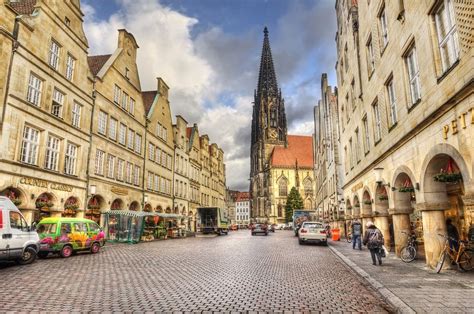
Münster is the kind of city that makes people relax without trying. It’s student-heavy, famously bike-friendly, compact, and full of “slow city” pleasures—markets, cafés, and long rides around the Promenade. It also sits in North Rhine–Westphalia and is widely described as a major Westphalian center with a large student population. (Wikipedia)
Because Münster feels open-minded and youthful, travelers often assume cannabis must be casually tolerated. In Germany, the story changed in a big way in 2024—but it didn’t become a free-for-all.
Germany’s Cannabis Act (CanG) took effect 1 April 2024, allowing adults (18+) to possess limited amounts and cultivate limited plants at home, while introducing strict rules about where consumption is allowed and setting up “cultivation associations” (clubs) whose rules came into effect later. (Wikipedia)
This guide is written for travel and everyday clarity: what the law permits, what still gets you in trouble, where people misunderstand the rules, and how to enjoy Münster without turning a relaxed trip into a stressful one. It does not include where to buy, who to ask, or how to dodge police.
What Changed in Germany (And Why Münster Now Gets Searched a Lot)
Before 2024, Germany treated cannabis more like a “prosecutorial discretion” topic depending on the state and circumstances. After 2024, Germany moved to a legalization model that is limited, regulated, and very location-specific.
Under the Cannabis Act as commonly summarized, adults can possess up to 25 grams in public and up to 50 grams at home, and can cultivate up to three plants for personal use. (Wikipedia)
But legalization came paired with restrictions that matter a lot in a city like Münster—especially because Münster’s best areas (Altstadt, Prinzipalmarkt, Promenade, parks, lakes) are exactly where families, students, and tourists mix.
Is Weed Legal in Münster?
Yes—with major limits.
In Germany (including Münster), adults 18+ can legally possess and cultivate cannabis within the Cannabis Act framework, starting 1 April 2024. (Wikipedia)
But it’s not “legal everywhere” and it’s not a commercial retail market. Germany’s model is not the same as U.S./Canadian dispensary systems. Instead, it relies on:
- personal possession limits,
- home cultivation limits,
- and regulated non-profit “cultivation associations” (clubs) under a separate pillar that began later. (BMG)
So the accurate Münster answer is:
Weed is legal for adult possession and limited cultivation in Germany—but public consumption has strict restrictions, and buying/selling outside the legal pathways remains illegal. (BMG)
The Key Legal Limits You Should Know Before You Do Anything
The Cannabis Act is easiest to understand as a set of “green lights” and “red lights.”
Green lights (for adults 18+):
- possession up to 25g in public and 50g at home (as commonly summarized) (Wikipedia)
- home cultivation up to three plants (as commonly summarized) (Wikipedia)
- cultivation associations (clubs) as a regulated pathway starting later (with rules taking effect 1 July 2024, as commonly discussed) (TADTP)
Red lights (the traps):
- consuming in prohibited public areas (more below) (BMG)
- consuming near or around minors in a way the law restricts (BMG)
- smoking/consumption in certain times/places (like pedestrian zones during daytime hours) (BMG)
- anything that looks like commercial sale or unauthorized distribution (still illegal)
If you’re writing a local city guide, this “rules first” framing is what makes your article helpful rather than vague.
Public Consumption Rules: Münster Is the Kind of City Where These Matter
Germany didn’t only legalize possession; it also defined where cannabis use is not allowed.
According to the German Federal Ministry of Health’s Cannabis Act FAQ, public consumption restrictions include:
- no consumption in the immediate vicinity of people under 18
- no consumption in/within the “range of vision” of schools, children’s/youth facilities, playgrounds, and publicly accessible sports facilities
- no consumption in pedestrian zones between 7 a.m. and 8 p.m.
- no consumption in cultivation associations and within the range of vision of cultivation associations (BMG)
That list is crucial for Münster because:
- Münster is dense and walkable,
- parks and waterfront paths are full of families and students,
- the city center has pedestrian-heavy shopping streets,
- and the vibe encourages hanging out outside.
So even if possession is legal, where you consume is where people get into trouble.
Why Münster’s “Bike City + Student City” Identity Changes the Practical Risk
Münster’s reputation as Germany’s “bicycle capital” is not just a fun fact; it’s a real-life risk factor for cannabis mistakes. (Wikipedia)
People often treat cycling like “not driving,” then make decisions they wouldn’t make behind a car wheel. But impairment plus road use is a bad mix anywhere. Even if you avoid criminal trouble, you can still ruin your day with:
- crashes,
- injuries,
- police attention due to unsafe riding,
- insurance headaches.
A Münster guide should gently but clearly say: don’t combine cannabis with bikes, scooters, or anything you need balance and reaction time for.
Cultivation Associations (Cannabis Clubs): Legal Pathway, Not Instant Convenience
Germany’s system includes “cultivation associations” (often called cannabis social clubs), which became legally possible under the second step of the framework. Rules for communal cultivation came into effect on 1 July 2024 (as widely described), but real-world licensing and rollout has been uneven. (TADTP)
A practical implication for Münster readers:
- You can’t assume there’s a smooth, immediate “join a club and pick up today” experience everywhere.
- Even where clubs exist, membership rules, limits, and licensing processes shape availability.
So: clubs are part of the legal structure, but they are not the same as retail storefronts.
What Is Still Illegal in Münster (Even After Legalization)
This is the section that prevents readers from making expensive mistakes.
Even in “post-legalization” Germany:
- Unauthorized selling and buying outside legal frameworks is still illegal.
- Large-quantity possession beyond limits can create legal problems.
- Consuming in prohibited places (especially near minors/schools/playgrounds/pedestrian zones at certain times) can trigger enforcement. (BMG)
If you’re writing for tourists, keep the message clean:
Germany legalized limited adult possession and cultivation. It did not legalize a free market, and it did not legalize consumption anywhere you feel like. (PMC)
“Weed Culture” in Münster: What It Feels Like on the Ground
Münster isn’t Berlin. It’s not a city defined by club culture. But it is youthful, social, and outdoorsy, and legalization has shifted the tone:
- People talk about cannabis more openly than before.
- There’s more “normalization” language (especially among students).
- Public consumption is still constrained by rules, so the culture is often about finding legal, respectful settings rather than flaunting it.
In Münster, the most realistic cultural footprint is subtle:
- conversations in student flats,
- home-grow hobby talk (within the three-plant limit) (BMG)
- and a stronger emphasis on not consuming around minors or in restricted zones.
A Münster-Specific “Do Not Be That Tourist” List
If someone reads only one section, make it this.
In Münster, the classic tourist mistakes include:
- Assuming “legal” means “public.” Public rules are strict. (BMG)
- Consuming while cycling. Münster is a bike city; don’t mix impairment with traffic. (Wikipedia)
- Using in pedestrian shopping areas during the day. The law specifically restricts pedestrian zones between 7 a.m. and 8 p.m. (BMG)
- Ignoring “line of sight” restrictions around schools/playgrounds/sports facilities. (BMG)
- Treating clubs like dispensaries. Clubs are regulated and licensing/availability varies. (CMS Law)
This keeps your article practical and distinct from generic Germany posts.
If You’re Not Using Weed: Münster Has Better Legal Ways to Unwind Anyway
A lot of people search “weed in Münster” when they really want:
- relaxation,
- better sleep,
- appetite,
- social ease,
- a “soft evening” vibe.
Münster already delivers that without cannabis drama:
- lakeside walks (Aasee),
- long bike rides sober,
- markets and cafés,
- quiet evenings in the Altstadt.
If your content is travel-first, you can frame cannabis as optional and emphasize Münster’s natural calm.
FAQs: Weed in Münster
Is weed legal in Münster?
Yes, within limits. Germany’s Cannabis Act took effect on 1 April 2024 and legalized limited adult possession and cultivation. (Wikipedia)
How much cannabis can an adult possess?
Common summaries of the Cannabis Act state adults can possess up to 25g in public and up to 50g at home. (Wikipedia)
Can I grow cannabis at home in Münster?
Common summaries state adults can cultivate up to three plants for personal use. (Wikipedia)
Where is cannabis consumption banned in public?
Germany’s Federal Ministry of Health FAQ states restrictions include bans in/within line of sight of schools, playgrounds, youth facilities, and publicly accessible sports facilities; restrictions in pedestrian zones between 7 a.m. and 8 p.m.; and bans in proximity to minors. (BMG)
Are cannabis clubs available in Münster?
Cultivation associations became part of the framework (with rules coming into effect from 1 July 2024), but licensing and rollout have been uneven across Germany. (TADTP)
Is Münster a “dispensary city”?
No. Germany’s model doesn’t operate like a North American retail dispensary market. It’s limited possession + cultivation + regulated associations. (PMC)
Is it safe to consume and then cycle around Münster?
Don’t. Münster’s cycling culture is a highlight, but impairment and traffic don’t mix. Münster is widely known for its bike culture, so this is a common risk scenario. (Wikipedia)
References
- German Federal Ministry of Health (BMG): Cannabis Act FAQ, including public consumption restrictions (minors, schools/playgrounds/sports facilities, pedestrian zones 7 a.m.–8 p.m.). (BMG)
- Library of Congress (Global Legal Monitor): summary noting restrictions on use near minors and certain public areas under the Cannabis Act. (The Library of Congress)
- Background summaries of the Cannabis Act’s effect date and limits (25g public / 50g at home / three plants). (Wikipedia)
- CMS legal roadmap: notes club regulations came into force 1 July 2024 and that licensing has been uneven. (CMS Law)
- Münster city orientation (state, size, student population, bike reputation). (Wikipedia)
Conclusion
Weed in Münster is no longer a purely underground topic—Germany’s Cannabis Act changed the landscape in 2024 by allowing limited adult possession and home cultivation. (Wikipedia) But Münster’s reality is shaped by the second half of the law: strict public consumption rules (especially around minors, schools, playgrounds, sports facilities, and daytime pedestrian zones) and a regulated club framework that doesn’t function like retail dispensaries. (BMG)
If you treat legalization as “do whatever anywhere,” Münster is exactly the kind of family-and-student city where you’ll get it wrong. If you treat it as “legal within clear boundaries,” you’ll have a far better time—and you’ll get to enjoy Münster the way it’s meant to be enjoyed: on foot, on a bike (sober), and at a calm café table.
You’re the best when it comes to marijuana products , always taking care of me. Definitely recommending you to my friends. Thanks for the quick delivery .Really happy with the product .As usual, it’s top-notch. Keep it up you. you can contact them on email Scenthub43@gmail.com and also there Telegram : https://t.me/Scenthub43
wow Thanks for the referral they have great service and got the best weed around. and the delivery is so smooth

Thanks for always being reliable! I can always count on you for good product.
You’re the go-to in the area for a reason. Always a smooth experience